Mga puwedeng gawin
Queen’s University: Limestone, Ivy and a Campus That Started in a Rented House
Na-update noong Nobyembre 24, 2026 · 2 lugar
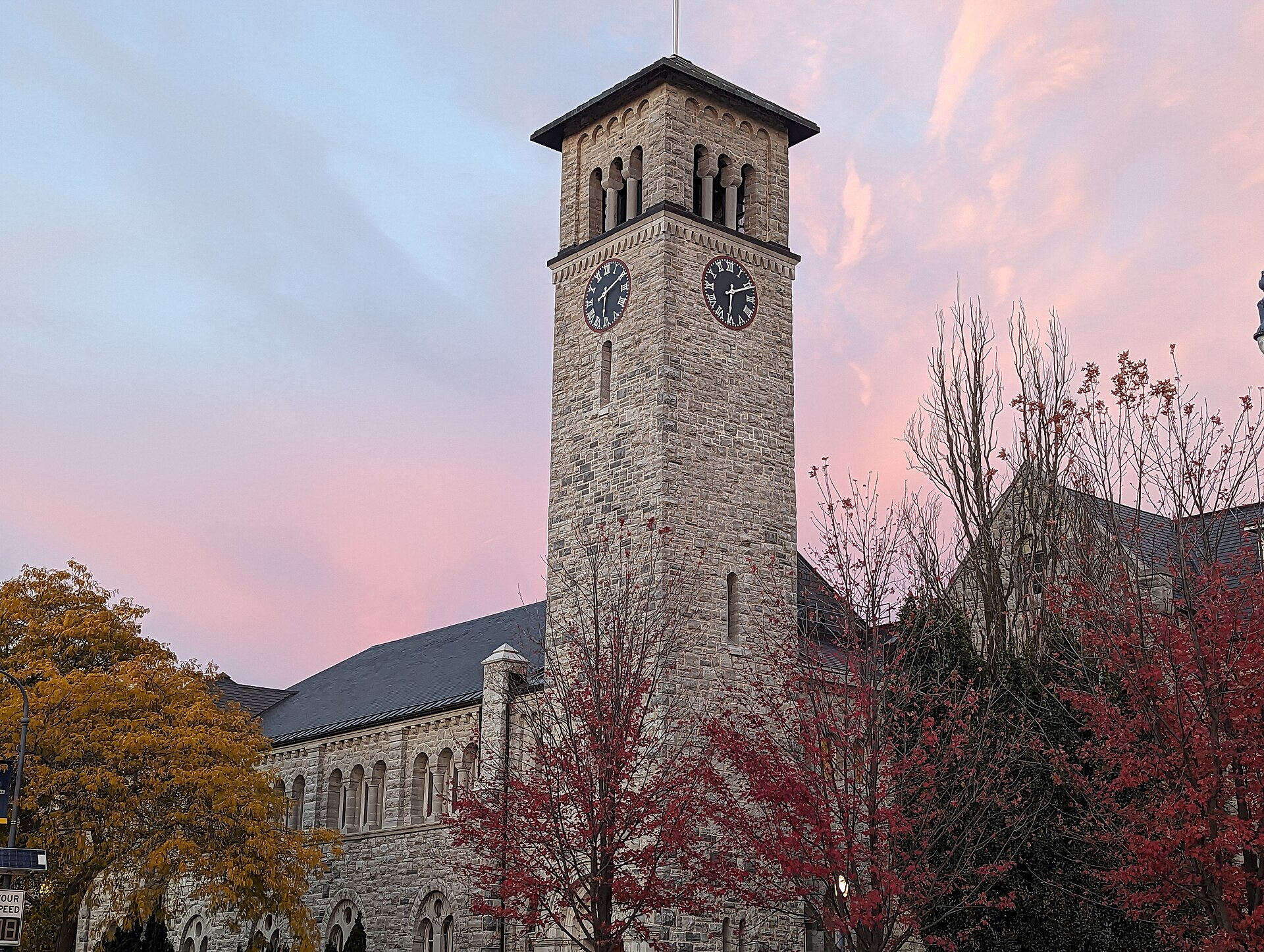
A royal charter, a clock tower, a lakeside campus and a lot of very old limestone. You don’t have to be a student to enjoy wandering around Queen’s.
Queen’s University is one of those campuses that looks like it was designed by a film crew who were told “make it look like a university.” Grey limestone, ivy, a clock tower, students carrying coffee across leafy quads. It’s also right next to the lake and a short walk from downtown, so it makes a great afternoon stroll even if your own school days are long behind you.
How it started (smaller than you’d think)
In 1841, Kingston was briefly the capital of the brand-new Province of Canada, and the Presbyterian Church of Scotland wanted a college to train ministers and teach “science and literature” to the youth of the colony. On October 16, 1841, Queen Victoria granted a royal charter for Queen’s College at Kingston, which is why the school is named for her. Queen’s still celebrates that date as University Day.
The charter had to cross the Atlantic by ship, packed in the luggage of the first principal, the Reverend Thomas Liddell. The first class met on March 7, 1842, in a small wood-frame house on Colborne Street, with two professors and a handful of students. Not exactly Oxford. Everyone starts somewhere.
Queen’s bought Summerhill, a big house on the hill near the lake, in 1854, and the campus grew out from there. In 1869 it became the first university west of the Maritimes to admit women to classes, which put it ahead of most of the country.
What to see on campus
- Grant Hall. The clock tower everyone photographs. It was built in 1905 and named for Principal George Monro Grant, the man who spent decades turning a small church college into a national university. The clock itself was built by Nathan Dupuis, a professor who taught geometry, astronomy and chemistry and apparently still had time to build clocks. During the First World War the hall became a military hospital.
- Summerhill. A grand old house that was the university’s early hub, where the sciences were first taught. It’s still in use, so admire it from outside.
- The Agnes Etherington Art Centre. On University Avenue, the university’s public art gallery has everything from Rembrandt to contemporary Indigenous art. It gets its own guide.
- The lake. The south edge of campus is steps from the waterfront path and Breakwater Park. Pair the two and you’ve got a whole afternoon.
Friendly tips before you go
- Go in October. The maples on campus turn red and gold against the grey stone, and it’s ridiculous how pretty it gets. Also, students will be everywhere. Plan accordingly.
- It’s a working campus. Classes, labs, exams, residences. Stick to the public paths and buildings that are open to visitors, and keep the noise down near the libraries.
- Eat like a student. Princess Street and the streets around campus are full of cafés and cheap lunch spots built to feed people who live on a student budget.
- Summer stays. Queen’s has offered summer accommodation in some residences to travellers. Check the university’s website for what’s available this year.
-
Mga puwedeng gawin Post-secondary university facility, department, or campus service affiliated with Queen's University in Kingston.
Agnes Etherington Art Centre
The university’s art gallery, on University Avenue.
-
Mga makasaysayang lugar Limestone city hall built in the 1840s, when Kingston was Canada’s first capital. A National Historic Site on Springer Market Square, with tours.
Kingston City Hall
Built while Kingston was the capital, around the same time Queen’s got going.