المواقع التاريخية
Cataraqui Cemetery: A Victorian Garden, a Prime Minister’s Grave and a Very Peaceful Walk
آخر تحديث: 24 نوفمبر 2026 · عدد الأماكن: 2
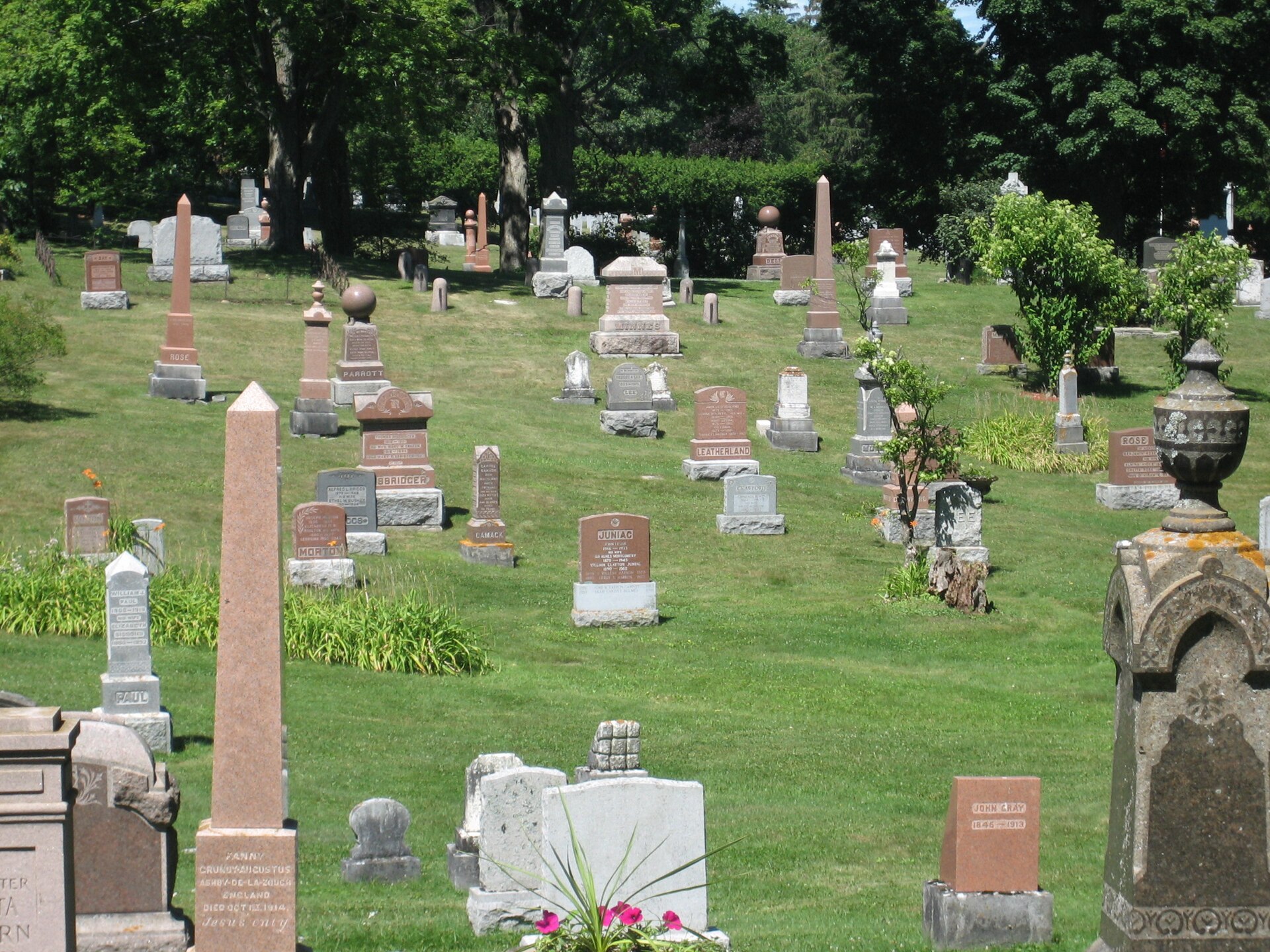
One of Canada’s first rural garden cemeteries, laid out in 1850 with hills, ponds and trees. Sir John A. Macdonald is buried here, along with more than 46,000 others.
A cemetery might seem like an odd item on a list of things to do, but Cataraqui Cemetery isn’t a grim little churchyard. It’s a rolling, park-like landscape of wooded hills, ponds, winding lanes and old trees, and it’s a National Historic Site. People come to walk, to look for birds, to find their ancestors, and to visit Canada’s first prime minister. Respectfully, of course.
A garden for the dead
By the mid-1800s, the small burial grounds inside Kingston were full, which was a problem for a growing city and an even bigger problem for public health. The fashionable solution was the “rural cemetery”: a landscaped park outside town, inspired by famous examples in France and the United States, where families could visit their dead in peaceful, natural surroundings.
The Cataraqui Cemetery Company was incorporated by an act of the legislature of the Province of Canada on August 10, 1850. Shareholders raised money to buy about 70 acres in Waterloo Village, later known as Cataraqui, and Frederick Cornell laid out the grounds in the Picturesque style, working with the hills and hollows instead of flattening them. It was non-denominational from the start, and it’s among the first rural cemeteries in Canada. Today it covers around 91 acres, and more than 46,000 people are buried here.
Sir John A.
The most famous grave belongs to Sir John A. Macdonald. He died in Ottawa on June 6, 1891, and his body was brought home to Kingston, where he lay in state at City Hall before being buried here in the family plot alongside his parents, his first wife Isabella, and the infant son who died at Bellevue House. His gravesite was named a National Historic Site in 1938, and the cemetery as a whole followed in 2011. Many other notable Canadians are here too, including Sir Alexander Campbell, a fellow Father of Confederation.
Macdonald’s legacy is a complicated one, especially for Indigenous communities, and Kingston has been working through that publicly. His grave is a place where many people stop to reflect on all of it.
What to expect
- The landscape. Hills, ponds, mature trees and curving roads. It’s lovely in every season, especially in spring and fall.
- Victorian stonework. Obelisks, carved monuments and family plots that show off a century and a half of the stonecutter’s craft.
- War graves. There are sections maintained under the Commonwealth War Graves Commission.
- Wildlife. Birds, and the occasional deer, enjoying the quiet as much as you are.
Friendly tips before you go
- It’s an active cemetery. Funerals and burials still happen here. Keep voices down, stay on the paths and roads, and give any service plenty of space.
- Get directions to the Macdonald plot. The cemetery has visitor information and maps; check its website or the office near the Purdy’s Mill Road entrance.
- Drive slowly or walk. The lanes are narrow and winding, and people walk on them.
-
المواقع التاريخية Italianate villa where Sir John A. Macdonald, Canada’s first prime minister, lived in the 1840s. A National Historic Site run by Parks Canada.
Bellevue House National Historic Site
The house where Macdonald lived in 1848–49, and where his first son died.
-
المواقع التاريخية Limestone city hall built in the 1840s, when Kingston was Canada’s first capital. A National Historic Site on Springer Market Square, with tours.
Kingston City Hall
Where Macdonald lay in state in 1891 before his burial here.